
How video support system is changing the Mainland Premier League
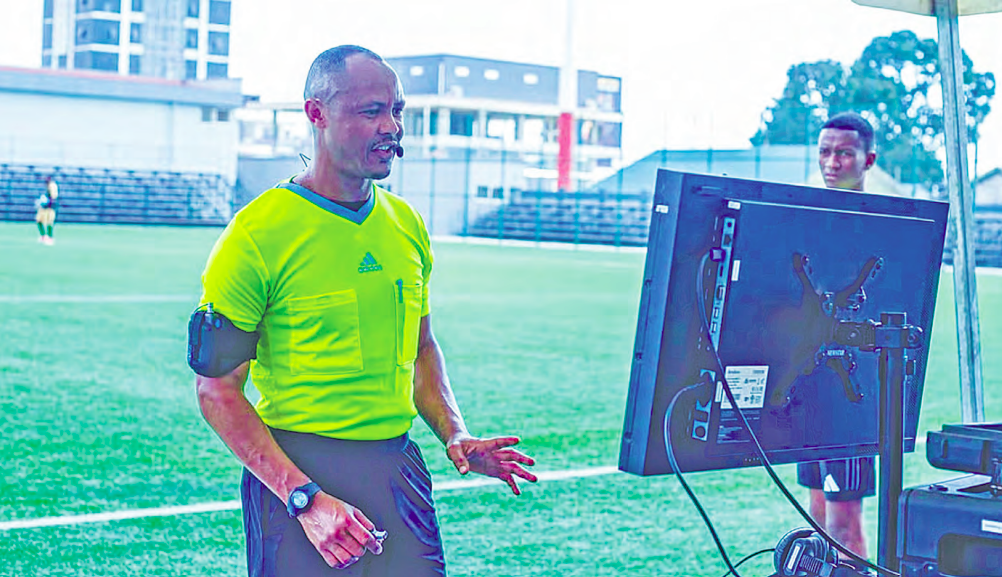
FOOTBALL is a game of fine margins, high drama and unending debate. For decades, the referee’s whistle was final, a solitary verdict capable of sparking joy, frustration or fury. But as the modern game evolves, technology has moved from…
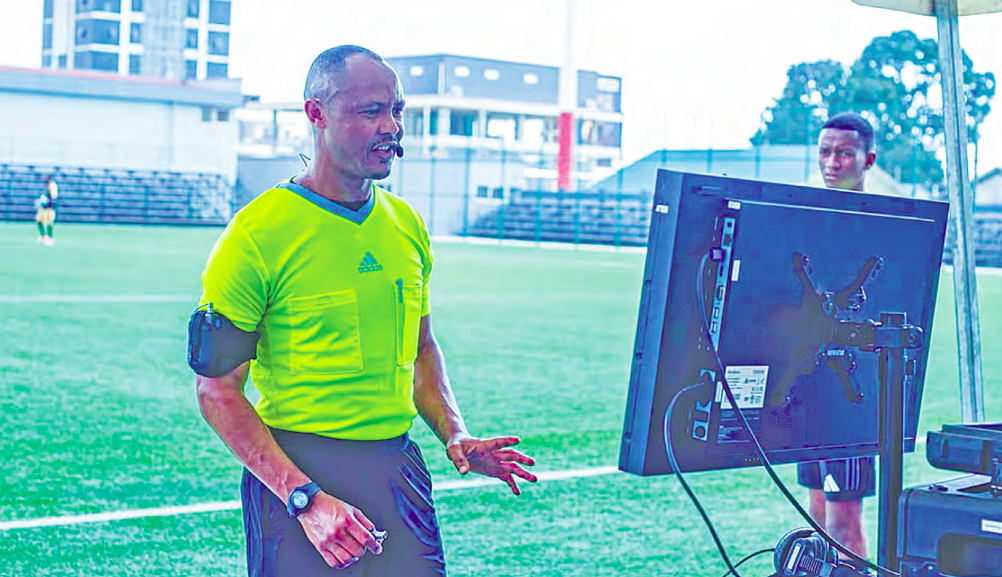
FOOTBALL is a game of fine margins, high drama and unending debate. For decades, the referee’s whistle was final, a solitary verdict capable of sparking joy, frustration or fury.
But as the modern game evolves, technology has moved from being a luxury associated with Europe’s wealthiest leagues to an increasingly important tool for protecting the integrity of competitions around the world.
Today in the top-flight league, the technological shift has taken a distinctive form.
Rule 20 of the 2026 Mainland Premier League regulations establishes the use of the Video Support System (VS) to assist referees in resolving clear and potentially decisive incidents during matches.
Yet while fans may already be familiar with the concept of video replays through the Video Assistant Referee (VAR) systems used in competitions such as the English Premier League and UEFA Champions League, Tanzania’s Video Support System operates according to a different philosophy.
It is not simply VAR under another name. Instead, the system combines referee authority with a structured mechanism through which teams can request reviews while also allowing the referee to initiate a review independently when doubts arise.
To understand how the system works and what it means for the future of Tanzanian football, Chairman of the Referees Committee Soud Abdi and a retired referee Othman Kazi have offered insight into the mechanics, psychology and principles behind the new system.
A different approach to video review
Under conventional VAR, coaches do not have the power to formally demand that the referee go to the monitor.
A separate team of video officials continuously monitors the match and checks incidents within the VAR protocol.
Where appropriate, they communicate with the referee and may recommend a review.
The Video Support System introduces a different route. Under Rule 20, the head coach or another senior member of the technical bench can request a review through the fourth official.
Players cannot directly approach or pressure the referee to initiate a review.
If a player believes an incident deserves attention, the request must go through the coaching or technical staff.
“Each coach is given two cards for a full game,” Abdi explained when describing the challenge mechanism used in the competition.
“When a coach feels that something did not go right and they need a review, they hand over a review request card to the reserve referee or fourth official.”
The review mechanism therefore introduces a strategic dimension to the technical area.
Coaches must decide whether a potentially decisive incident is important enough to use one of their available requests.
But there is an important qualification: The referee is not dependent on a coach’s request. Rule 20 also gives the referee authority to initiate a review independently if he has doubts about an incident.
That means the system is not simply a coachversus-referee challenge mechanism.
The dugout has a formal avenue to request intervention, but the referee remains at the centre of the decision making process.
What can actually be reviewed?
The Video Support System is not designed to turn every refereeing decision into a potential challenge.
Rule 20 limits its use to four principal areas where an incident could have a clear and potentially decisive impact on a match.
These are: Whether a goal should stand or not. Whether an incident warrants a penalty. Whether an offence deserves a straight red card or a second yellow card.
Correct identification of the player responsible for an offence, particularly where the wrong player has been punished. That limitation is important.
A coach cannot simply request a review because he disagrees with a throw-in, corner, free-kick or ordinary foul.
The incident must fall within the areas covered by the regulations. The system is therefore designed around match-defining decisions, rather than continuous video intervention.
The race against the restart
In football, momentum can change in seconds. The VS regulations reflect that reality.
A team seeking a review must act quickly. According to Rule 20, the request must be made within one minute of the incident or before play resumes.
Once the relevant opportunity has passed, a late request cannot be considered. Abdi explained the importance of the timing.
“The reserve official signals the match referee when play stops, before the game restarts,” he said.
“Because you cannot request a review after the game has already restarted, if you wait, that opportunity is lost.”
That creates another layer of pressure for coaches and their technical teams. An assistant may spot something on the bench monitor.
The coaching staff must assess what happened, communicate with the head coach or senior technical official and decide whether the incident is serious enough to justify a review.
The decision has to be made before the window closes. The referee still has the final word.
Perhaps the most important principle in Rule 20 is that video evidence does not automatically overturn the referee’s original decision. The starting point remains the decision made on the field.
The referee can review available footage from different camera angles, with assistance from the VS officials, but the original decision is changed only when the evidence clearly and without doubt demonstrates that it was incorrect.
If the footage remains inconclusive, the original decision stands. That principle is central to understanding the philosophy of VS. It is not intended to find every possible mistake.
It is intended to correct clear errors in potentially decisive situations. Kazi stressed that distinction when comparing VS with VAR.
“FVS is video support in the game of football. Alright? While VAR is the Video Assistant Referee. These are two different things entirely,” he explained.
“The first to review the decisions are not their fellow referees. But it is the coach of the team who needs a review of the decisions that the referee has taken.”
However, under the Rule 20, the referee can also initiate a review when he has doubts. And regardless of who triggers the process, the final authority remains with the match referee.
Referees review together
When the referee goes to examine an incident, he is not necessarily making the assessment in isolation.
Kazi explained that the referee is accompanied by a colleague during the review process.
“When a referee goes to the FVS, he is accompanied by his colleague. Do you know why? They should consult each other,” Kazi said.
“One might say, ‘Sir, I see it like this.’ His colleague will reply, ‘But look at this angle. Really?’ Then he might say, ‘Sir, look at this, what does the law say here?’”
The consultation is particularly important because the on-field officials must interpret both the footage and the relevant Laws of the Game.
“They bring their collective minds together,” Kazi added, noting that the process can become difficult where specific clauses of the law have to be applied to an incident.
This is another important distinction from conventional VAR. In a traditional VAR operation, a dedicated video-review team is stationed in a remote operation room or facility, communicating with the referee through the headset.
With VS, the system places greater emphasis on supporting the match officials themselves. The fourth official has an important role The fourth official is central to the operation of the system.
They receive review requests from the technical bench, communicate the request to the referee and help manage the process.
But Rule 20 gives the fourth official another specific responsibility: Every goal is reviewed through VS to check whether an offence occurred before the goal was scored.
This means not every use of the system necessarily begins with a coach waving a review request. Goals are subject to a mandatory check.
If the fourth official’s assessment differs from the referee’s view, the referee can conduct his own review and make the final decision.
That distinction helps explain the broader philosophy of the system: VS is not simply a tool for coaches to challenge referees.
It is also an additional layer of support for match officials in decisions that could materially affect the outcome of a game.
VS has already changed decisions
The impact of the system is no longer theoretical. Several incidents in the Mainland Premier League have already demonstrated how VS can influence major decisions.
The system has played a role in a series of straight-red-card decisions, including those involving Simba players David Kameta against Kagera Sugar, Ibraheem Jabaar against Pamba Jiji and Anthony Mligo against Singida Black Stars.
In each case, a VS review resulted in the player being shown a straight red card. Coastal Union captain Geoffrey Manyasi was also shown a straight red card following a VS review against Young Africans.
These incidents demonstrate one of the four areas specifically covered by Rule 20: Serious disciplinary offences.
But perhaps the clearest illustration of what VS can and cannot do came during Young Africans’ 3–1 victory over Namungo. One match, two contrasting goal decisions At one end of the pitch, Yanga forward Peter Shalulile appeared to have scored.
The goal, however, was subsequently overturned after the referee, with the assistance of VS, determined that Shalulile had been in an offside position.
At the other end, Namungo’s Herbet Lukindo also found the net. This time, the review produced the opposite outcome: The goal was confirmed after VS evidence established that the player was in an onside position.
The same match therefore provided two contrasting examples of the technology.
In one instance, video evidence provided grounds to overturn an apparent goal. In the other, it provided evidence to confirm the decision on the field.
That distinction is important. The purpose of VS is not necessarily to change the referee’s decision. It is to give the referee additional evidence when a potentially decisive incident requires closer examination.
Penalties under review VS has also played a significant role in penalty decisions.
In Azam’s 1–1 draw with Polisi Tanzania, Azam were awarded a penalty after the referee, with the assistance of VS, determined that Henock Molia had been fouled inside the penalty area by a Polisi Tanzania defender.
There was another penalty incident in the same match, this time involving Azam’s Taiwo Abdulrafiu and Polisi Tanzania’s Baraka Mwambule. Abdulrafiu was adjudged to have fouled Mwambule inside the penalty area, resulting in a spot-kick for Polisi Tanzania.
The match therefore provided another illustration of how video support can influence decisions involving both sides.
Together, the incidents involving goals, penalties and red cards show that VS is already operating across several of the principal areas identified in Rule 20. What happens when the technology fails?
Technology itself is not immune to failure. The regulations anticipate that possibility. If the VS system develops a technical fault, the match continues without the use of the system.
The coaches and team captains are informed of the situation. That provision is significant because it makes clear that the technology is an aid to officiating, not a prerequisite for the match to continue.
The referee’s authority and the Laws of the Game remain the foundation of the competition.