

Eva Mbuya sees the best of her Masters Degree in sacred touch artistry

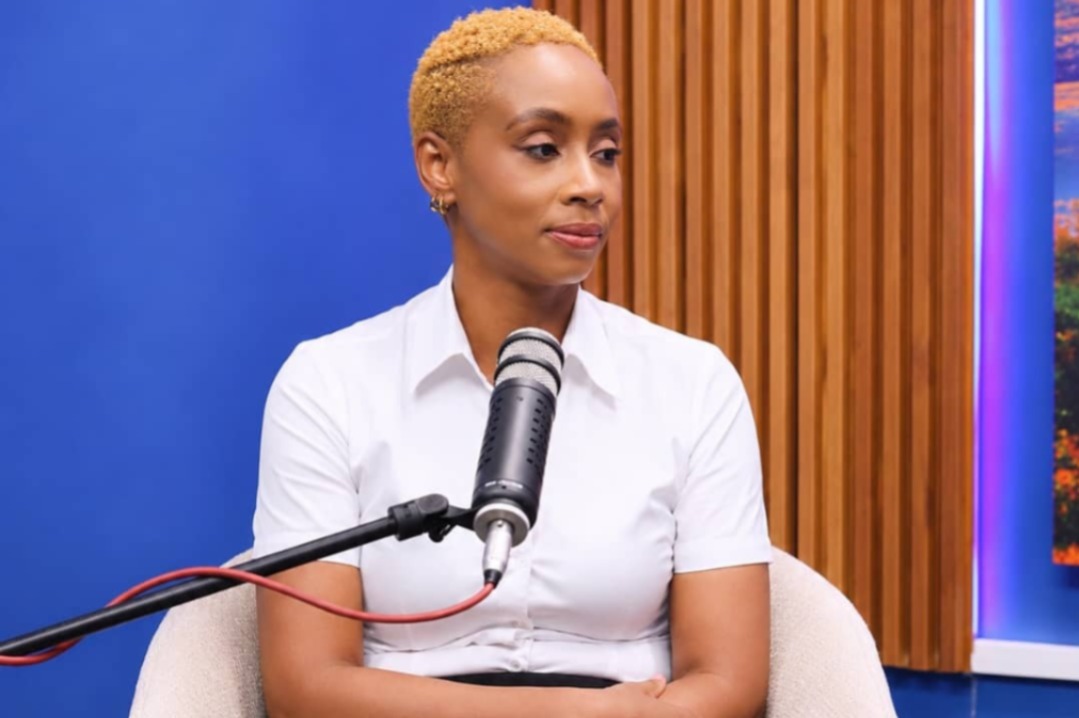
DAR ES SALAAM: WHILE many people associate makeup and beauty services with the living, 44-year-old Eva Hillary Mbuya has chosen to challenge that perception by using her makeup skills to serve the dead.
Through her company, Sacred Touch Artistry, Eva has ventured into a field that remains relatively unfamiliar to many Tanzanians, specialising in mortuary makeup and the restoration of deceased people’s appearance before they are viewed by family members, relatives and friends.
For Eva, the service goes beyond beauty. It is about honouring the deceased; preserving their dignity and helping bereaved families retain peaceful final memories of their loved ones.
Speaking to Daily News Digital, Eva said the idea of establishing the service came from recognising that despite having makeup skills, there was an underserved group that rarely benefited from such services: people who had passed away.
She said she saw an opportunity to apply her skills in an area where demand existed but had received little attention, unlike conventional beauty services targeting the living.
“The only reason I thought about doing makeup for the deceased was that I realised they were the ones who did not have this service. With the makeup skills I had, I saw that this was an area where I could apply my knowledge and where services were still needed,” she said.
Beauty services for the deceased are about dignity
Eva explained that the human body undergoes changes after death, which can significantly alter a person’s appearance, particularly when death results from an accident or an illness that has affected the body.
According to her, such changes can make it difficult for relatives to recognise their loved ones as they remember them in life, potentially adding to their emotional distress during the final farewell.
She said mortuary makeup aims to restore the deceased person’s appearance as much as possible, allowing families to say goodbye in a peaceful and dignified manner.
She identified three main reasons for the importance of the service: restoring the deceased’s appearance as much as possible, caring for them and preserving their dignity, and giving bereaved families positive final memories.
“When you look at someone for the last time, you should be left with a good image of the person you knew, rather than remembering an appearance that has changed so much that it frightens you. We want families to be able to say goodbye without experiencing additional emotional distress,” Eva said.
Nursing experience gave her the confidence to work with the deceased
Although the work may seem difficult to many people, particularly because of the fear associated with dead bodies, Eva said it was not unfamiliar territory for her.
This is largely due to her professional background in the health sector. She attended Msalato Secondary School and later Jangwani High School before joining Muhimbili University, where she earned a Bachelor of Science in Nursing.
She also holds a Masters Degree in Nursing Science, specialising in Critical Care and Trauma.
Eva said her experience caring for critically ill patients and accident victims, including some who died while receiving treatment, helped her develop the ability to work in emotionally and physically challenging environments.
“I built that confidence over a long period. I have witnessed people die in my hands while I was carrying out my duties of caring for them. Therefore, through training and practical experience, I had already become accustomed to such environments,” she said.
Public misconceptions pose a bigger challenge than the work itself
Despite her confidence and experience, Eva acknowledged that the biggest challenge since establishing the service has been limited public awareness.
She said when she officially began promoting Sacred Touch Artistry, she discovered that many people had little understanding of the importance of mortuary makeup, while others held misconceptions and negative perceptions about the service.
This has prompted her to adjust her business approach by placing greater emphasis on educating the public before expecting the service to gain wider acceptance.
She said the comments and discussions that emerged on social media following her introduction of the service did not discourage her. Instead, they helped her assess public awareness and identify areas requiring further education.
“When I started, my intention was to introduce the service and raise awareness. After seeing people’s comments, I realised that many lacked sufficient understanding. To me, their reactions were an assessment of where I needed to put more effort into public education,” she said.
Eva added that her family, including her four children and relatives, had supported her venture. She said her children were already familiar with the nature of her previous work in the health sector and therefore did not consider the service unusual.
Every deceased person has unique needs
In providing the service, Eva said one of the most important steps is consulting the deceased person’s relatives before beginning the work.
She explained that because she did not know how the deceased lived, how they preferred to look or what their beliefs were, it was important to speak with the family to understand the appearance they wanted.
This approach ensures that the service reflects the family’s wishes rather than applying the same makeup style to every deceased person.
She also said she takes before-and-after photographs for record-keeping and to help relatives understand the changes made, particularly when the body has already undergone significant changes.
However, she acknowledged that not every body can be restored to the desired appearance. Some of the bodies she receives have suffered extensive damage due to accidents or post-mortem changes.
In such circumstances, she said the work can become more difficult and time-consuming, stressing that some conditions cannot be corrected through cosmetics alone.
She explained that when a body is too severely damaged to be handled safely or achieve the expected results, families are advised to keep it covered rather than display it.
Preserving dignity while serving the deceased
Another issue Eva prioritises is separating financial arrangements from the actual delivery of the service.
She said payment agreements are made before work begins to avoid situations where relatives have to start looking for money while the service is underway or mourners are waiting for the final viewing.
In her view, such situations could undermine the dignity of the deceased and compromise the respect that should be maintained during the process.
She emphasised that when working, she does not regard the deceased as an ordinary client but as a human being deserving of care, while her actual clients are the relatives or family members who engage her.
However, she acknowledged that preparation time remains another challenge, particularly because she currently does not have a dedicated office and relies on spaces arranged by the deceased person’s family.
She said some families fail to understand how much time the preparations require, creating pressure when relatives and friends are waiting for the final viewing.
Recalling her first assignment, which she carried out voluntarily, Eva said she faced time constraints after the family assumed that makeup could be completed within a few minutes. This forced her to rush the preparations as the scheduled viewing time approached.
Since then, she said she has learnt the importance of agreeing on the time required before starting the work.
A growing business with prospects for expansion
Despite having started the business recently, Eva said she had already secured clients, which she considers an early achievement given how unfamiliar the service remains in Tanzania’s market.
She said limited public awareness was slowing the business’s growth, despite the potential demand arising from deaths that occur every day.
She is currently receiving inquiries from different regions, including people seeking the service and makeup artists interested in joining her.
Eva said she was willing to provide services outside Dar es Salaam and even beyond Tanzania, provided arrangements were made to cover travel and accommodation costs.
From a business perspective, she explained that her decision to enter the field was also informed by an assessment of market competition. Rather than joining the conventional beauty industry, where many makeup artists already offer similar services, she chose to specialise in an area she believed remained largely underserved.
Eva’s message to women with unfulfilled dreams
Beyond discussing her business, Eva has a message for women who aspire to establish businesses or pursue new ventures but are held back by age, societal perceptions or fears of starting late.
Using her own experience as an example, she said that at 44 and as a mother of four, she still found an opportunity to start something new and contribute to society.
She argued that success should not be limited by age, urging people to believe in themselves and pursue their ambitions as long as their activities are lawful and do not harm others or the environment.
“Do not worry about where you are starting from. I am 44 years old and a mother of four, but I am still here starting something new. As long as you are alive, you still have an opportunity to do what you aspire to do,” she said.
She also called on the government to expand empowerment opportunities, training and mentorship programmes for women aged 40 and above, arguing that this group still has the potential to contribute to national development but often lacks opportunities that match its capabilities.
Despite holding a postgraduate qualification, Eva said restarting one’s economic and professional journey can be challenging because of systems that place heavy emphasis on work experience and opportunities that sometimes fail to take into account women who have spent considerable time raising families.
For Eva, establishing Sacred Touch Artistry is not merely the beginning of a business venture but also a journey demonstrating that skills can be applied in unconventional fields and that human dignity should not end with death.
JIUNGE NA SOGA COMMUNITY
MASHABIKI WA MICHEZO NA MATUKIO DUNIANI WANAKUTANA HAPA. HAKUNA FUJO, HAKUNA MATUSI — NI MAZUNGUMZO YA MAANA NA MARAFIKI WAPYA.
✅ MFUMO UNAZUIA CHATS ZISIZOFAA
✅ KUBLOCK USER ASIYE NA MAADILI
✅ KUMSHITAKI NA KUMFUKUZA MTUMIAJI MBAYA
✅ KUFOLLOW NA KUBEFRIEND WATUMIAJI WENYE MAADILI
What's Your Reaction?
 Like
0
 Dislike
0
 Love
0
 Funny
0
 Wow
0
 Sad
0
 Angry
0





Comments (0)