

JNHPP lifts TZ’s power status

JNHPP lifts TZ’s power status
 1 hour ago
1
1 hour ago
1
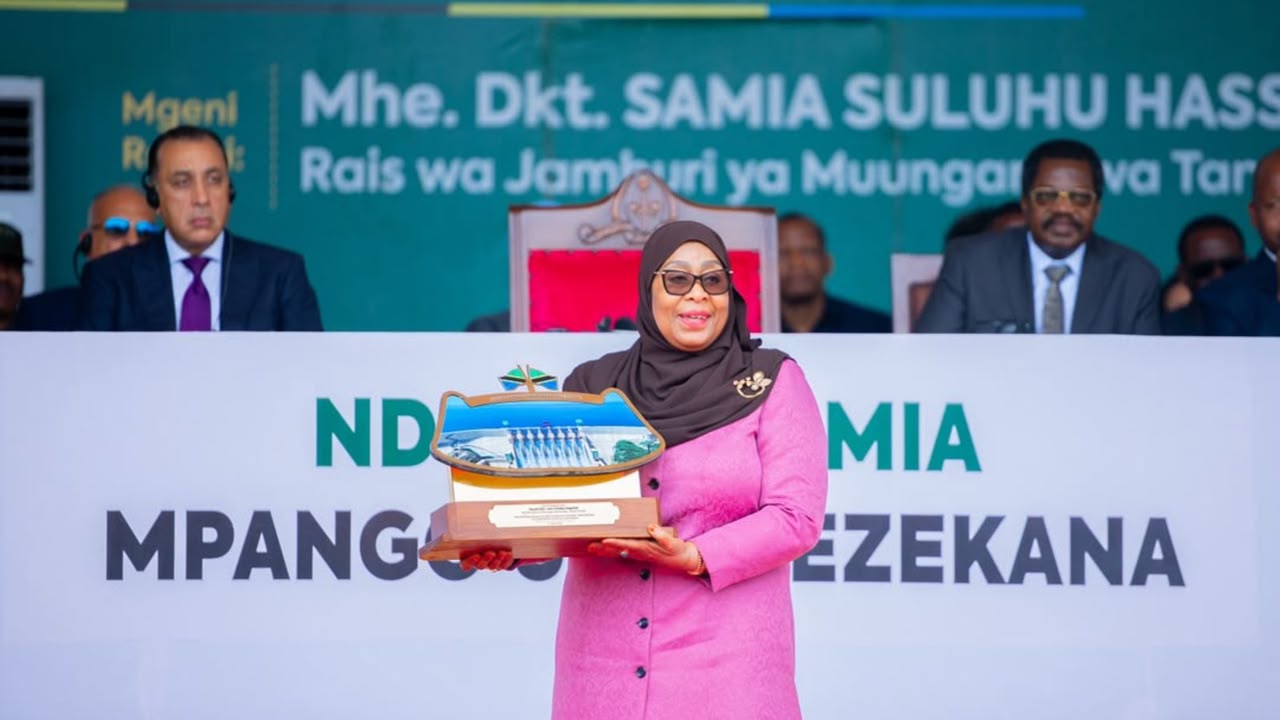
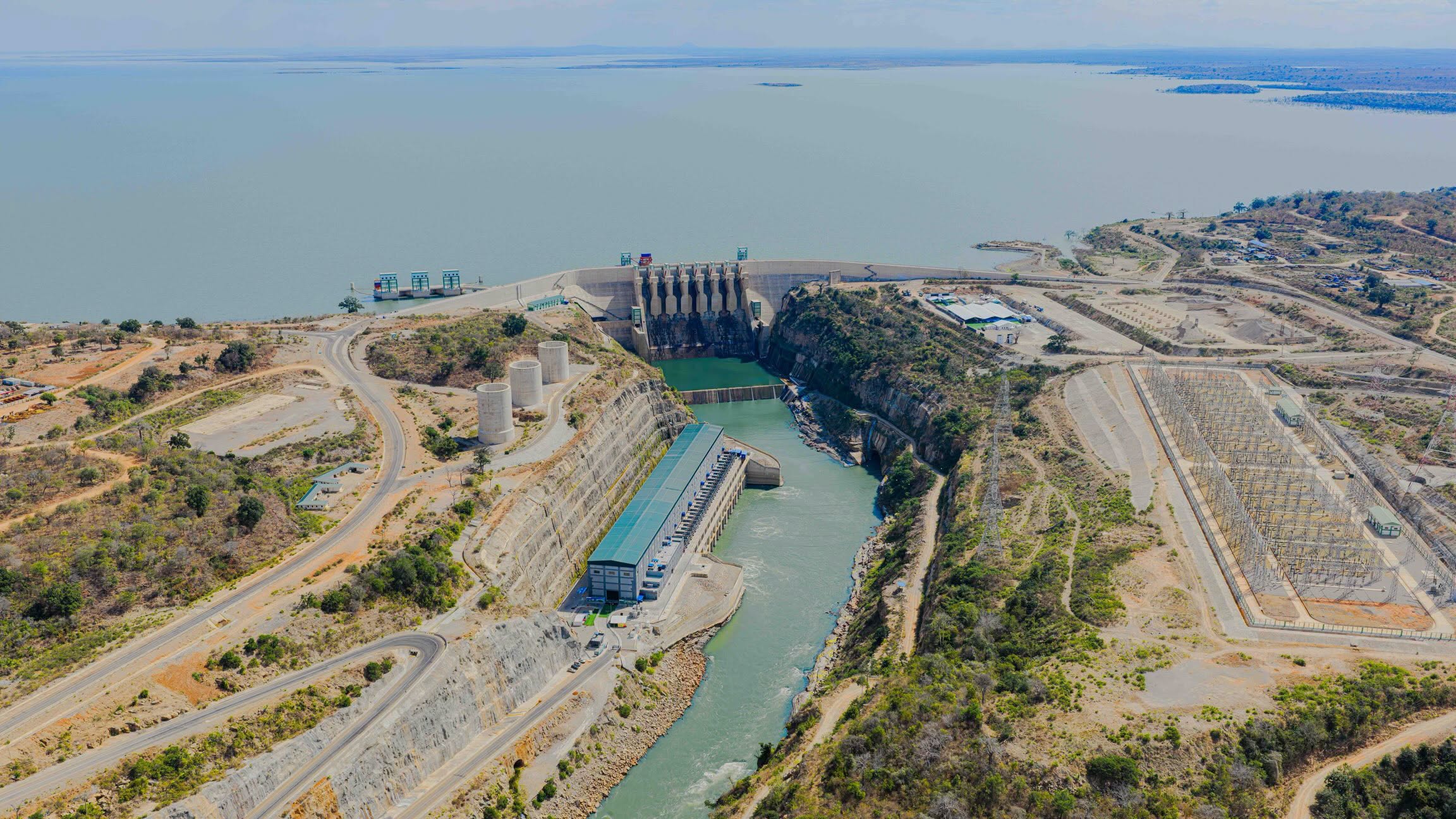
RUFIJI: TANZANIA has emerged as East Africa’s leading electricity producer, following the commissioning of the 2,115-megawatt Julius Nyerere Hydropower Project (JNHPP), a milestone that has more than doubled the country’s generation capacity.
The project, inaugurated on Saturday by President Samia Suluhu Hassan in Rufiji, Coast Region, raises Tanzania’s total installed electricity capacity to 4,646MW against a peak national demand of 2,271MW, creating a surplus of 2,375MW.
The surplus positions the country at the right step to accelerate industrialisation and expand electricity exports to neighbouring countries.
Tanzania has already moved to tap this opportunity, announcing plans to supply electricity to Zambia, once the ongoing Tanzania–Zambia interconnector is completed, a move expected to strengthen regional power pool trade.
JNHPP comprises nine generating units (turbines), each with a capacity of 235MW, making it one of Africa’s largest operational power plants. At the continental level, it ranks among major projects, with Ethiopia’s 5,150MW Grand Ethiopian Renaissance Dam (GERD) remaining the largest.
Within the East African Community (EAC), Tanzania now leads in installed capacity, surpassing Kenya, whose e l e c t r i c i t y capacity stands at 3,840.8MW as of June 2025, according to the Energy and Petroleum Regulatory Authority (EPRA).
Kenya’s generation mix is dominated by geothermal power (25.9 per cent), followed by hydropower (24 per cent), thermal (17.2 per cent), solar (14.1 per cent) and wind (12 per cent).
Uganda follows with 2,098.2MW by the end of 2025, according to the Electricity Regulatory Authority (ERA), with renewable sources accounting for over 95 per cent of its capacity.
Rwanda and Burundi trail significantly, with installed capacities of about 406MW and just over 109MW respectively.
These figures underscore Tanzania’s dominance, with its installed capacity now more than double Uganda’s and over 11 times that of Rwanda.
Minister for Energy, Mr Deogratius Ndejembi, said the project has strengthened Tanzania’s position as a regional power hub.
“The commissioning of JNHPP has significantly enhanced our capacity to meet domestic demand while opening wider opportunities for electricity trade within Eastern and Southern Africa,” he said.
He added that Tanzania’s membership in the East African Power Pool (EAPP) and Southern African Power Pool (SAPP) provides a strategic platform to connect regional markets, noting that agreements are already in place with Zambia and Kenya for power trade.
Permanent Secretary in the Ministry of Energy, Engineer Felchesmi Mramba, dismissed concerns over the plant’s ability to transmit its full output, saying the national grid has sufficient capacity.
“We are 100 per cent certain that we can operate all the machines. But we cannot operate all the machines if there is no demand,” he said.
He noted that JNHPP operates alongside other power plants, including Mtera, Kinyerezi, Ubungo, Tegeta and Pangani Falls, with generation adjusted based on demand.
Eng Mramba said the hydropower project currently contributes about 50 per cent of electricity consumed in the country, refuting claims that it is underutilised.
He also highlighted improvements in transmission infrastructure, particularly the Chalinze corridor, which now has two parallel lines with a combined capacity of 4,000MW well above the plant’s 2,115MW output.
ALSO READ: JNHPP: Powering Tanzania’s economic future
“We have the capacity to carry more electricity than is generated here,” he said. Leaders from across the political divide have praised the project as a transformative investment.
Former CHADEMA Chairman Freeman Mbowe described it as a major national achievement that should unite Tanzanians.
“The project should not be given a political face. It deserves to be congratulated and embraced by everyone,” he said.
Government Chief Spokesperson Mr Gerson Msigwa said the project fulfils a long-standing vision initiated by the country’s founding leader, Mwalimu Julius Nyerere, in the 1970s.
He said the relatively low-cost power generated by JNHPP will stimulate industrial growth, agriculture and the digital economy.
On electricity tariffs, Mr Msigwa said any reductions would depend on consultations and regulatory processes involving the Energy and Water Utilities Regulatory Authority (EWURA).
JIUNGE NA SOGA COMMUNITY
MASHABIKI WA MICHEZO NA MATUKIO DUNIANI WANAKUTANA HAPA. HAKUNA FUJO, HAKUNA MATUSI — NI MAZUNGUMZO YA MAANA NA MARAFIKI WAPYA.
✅ MFUMO UNAZUIA CHATS ZISIZOFAA
✅ KUBLOCK USER ASIYE NA MAADILI
✅ KUMSHITAKI NA KUMFUKUZA MTUMIAJI MBAYA
✅ KUFOLLOW NA KUBEFRIEND WATUMIAJI WENYE MAADILI
What's Your Reaction?
 Like
0
Like
0
 Dislike
0
Dislike
0
 Love
0
Love
0
 Funny
0
Funny
0
 Wow
0
Wow
0
 Sad
0
Sad
0
 Angry
0
Angry
0






Comments (0)