

Dear Jah Kimbuteh, it’s ragga riddim that dictates terms now

DAR ES SALAAM: IT’S dancehall ragga, not traditional roots reggae, that dictates terms in today’s major hits of Bongo Flava and its associated Afrobeat variants. You won’t miss an element of Dancehall ragga in the hits of Africa’s contemporary stars from Burna Boy, Diamond Platnumz, Zuchu and Yemi Alade.
It is Ragga-flavoured Bongo Flava to Navy Kenzo’s “Kamatia Chini” or Diamond’s “Katam”, but Mbosso stood with lucky Dube-styled Roots Reggae Mbosso’s crafty Singeli hit, “Asumani”, is a vibrant, storytelling-driven song that shrugged off the common ragga vibe favoured by his mega stars.
Set against a fast-paced, energetic beat, the song mixes Swahili street slang, cultural references, and Roots Reggae In its beginning, “Asumani” features a fast Singeli beat falling between 180 and 300 beats per minute. Close to its climax, it slows to Roots Reggae time beats, which is arguably a rare combination “Asumani” can justify it when he abruptly switched from the guiding 6/8 beat to 3/4 governed reggae hit; “Nobody Can Stop Reggae…”, whose timing clearly answers the call-and-response idiom. It is exceptional work since it stands apart from the governing trend of the ragga craze.
By today, the most sampled dancehall and ragga artists are Sister Nancy, Chaka Demus & Pliers, Beenie Man, Shabba Ranks, Cutty Ranks, and Wayne Smith, whose vocal hooks and classic riddims continue to dominate modern hip-hop, pop, Bongo Flava and Afrobeats productions.
Like Bongo Flava, a ragga comes from Raggamuffin, as a subgenre of dancehall and reggae music flavoured by American Funk, Hip Hop and RnB.
Roots and Kulture, the Tanzanian band brought Roots Reggae, raga and funky on the same music menu sadly missed this music bandwagon by a whisker.
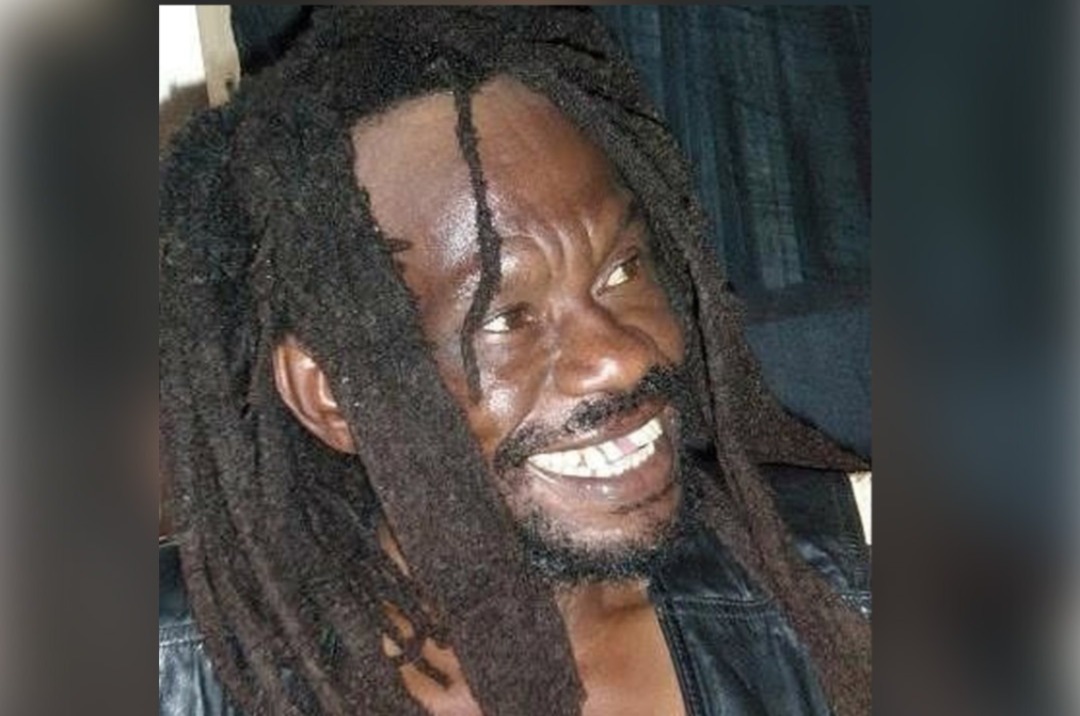
Sadly, passed away in 2018, Jah Kimbuteh and his Roots and Kulture band could fit into the reggaefunky set-up.
Born Samwel Mrekheni, Jah Kimbuteh and his Roots and Kulture band blended afrobeats with reggae and traditional African music into a fresh potpourri of scintillating and hypnotising sounds.
He has written many songs that represent popular outcry from different sections of society. Jah Kimbuteh and the lead singer, Asante Rabbi Hyness (Mwakangale), were the stars of the band, accompanied by bassist Peter Paul Mbilinge, drummer Hamis Binchuchu, percussionist David Msita Manju and Harry Pilimo on keyboard.
ALSO READ: Only the tough get going when Bongo Flava hits pearl jubilee
Though it was Brian Tshaka and his Otshekas Band as the first Tanzanian reggae group, the history of reggae music in Tanzania will never be complete without mentioning Jah Kimbuteh. For an ordinary Tanzanian, Jah Kimbuteh is the pioneer in Tanzanian reggae music.
He started his Roots and Culture Band in Dar-es-Salaam in 1983. During that time, rastafarianism and reggae music were still not very common in Tanzania.
After a short retreat in the port city of Tanga, Jah Kimbuteh returned to Dar es Salaam with a full force and new energy, ready to roar again.
With young musicians mostly from the Kinondoni area, Jah Kimbuteh made shows both in Tanzania and neighbouring countries in the mid 1980’s.
The band’s latest albums, “True Democracy” and “I am the Lion”, concentrate on socio-political issues. “I always try to reach and educate the masses through reggae music”, Jah Kimbuteh was quoted as saying during his band’s performance at YMCA Hall in 1986.
Though it was a Tanzanian band, Roots and Kulture had a huge audience in Zimbabwe where they performed regularly in the mid-1980s.
“They (Zimbabweans) adore our music because we incorporated various African beats with key elements of reggae,” noted Asante Rabbi, the band’s lead singer and entertainer after their concert at YMCA Hall in 1986.
The band’s popularity began to fade in the late 1980s when its crafty drummer, Hamis Binchuchu, disappeared into thin air without a trace.
A few months later, the band lost Asante Rabbi, who penned the band’s eponymous hit, Mwanalulu (African Lady) and was the chief entertainer.
The band was completely defunct after David Msita Manju left the band to concentrate on fashion designing.
By the early 1990s, Roots Reggae was completely eclipsed by ragamuffin with Shabba Ranks, Buju Banton and Chaka Demus & Pliers commanding the run.
Aligning well with African beats and hip-hop vocals gave ragga a platform to command the music scene globally even in the US whose music influenced the whole globe.
Mbosso’s “Asumani” seems to distance itself from the ragga music craze, as modern Bongo Flava or Afrobeats artists flavour their songs with dancehall ragga, not roots reggae.
Like the rest of Africa, modern Bongo Flava and Afrobeats artists lean toward dancehall ragga) rather than roots reggae because ragga shares Afrobeats’ fast-paced, digital, club-ready DNA, whereas roots reggae is built on slower, live-band instrumentation.
Both Bongo Flava, Afrobeat music, whether played by Tanzanians, Nigerians or South Africans rely on digital drum programming unlike the live band music of the late 1970s and 1980s.
Modern-day music, as explained by Innocent Nganyagwa (Ras Inno) who is still loyal to Roots Reggae, dancehall ragga and Bongo Flava music, is in favour of electronic “riddims” and drum machines.
He says the new generation of music is produced the same way, making dancehall basslines and snare patterns easy to blend into contemporary Afro-pop beats.
Music analysts see dancehall ragga lure more youthful fans because it is faster, punchier, and designed specifically for high-energy dancefloors matching the party and club focus of modern Afrobeats.
Dancehall ragga is done in percussive vocals, unlike American guitar that dwells much on bending notes.
As users on Reddit note, a defining trait of dancehall is the deejay “toasting” or chanting rhythmically over a beat.
In Bongo Flava or Afrobeat variants, artists treat their voices like another percussion instrument. Jamaican Patois language used in ragga has a natural, punchy cadence that pairs effortlessly with Nigerian Pidgin, Ghanaian Pidgin, and East African Sheng, creating a shared rhythmic slang.
While roots reggae was huge in Africa decades ago, the 1990s and 2000s boom of dancehall stars like Sean Paul, Beenie Man, Buju Banton and Shaggy directly shaped the pioneers of modern Afropop as one can see n stars like Daddy Showkey, Timaya, Patoranking, or Burna Boy.
Roots reggae is heavily tied to Rastafarian spirituality and political consciousness as opposed to Dancehall that focuses more on street swagger, nightlife, relationships and everyday hustle, themes that align closely with modern mainstream Afro Pops.
In Tanzania, lke elsewhere in Africa, most sampled dancehall and ragga artists today are Sister Nancy, Chaka Demus & Pliers, Beenie Man, Cutty Ranks, and Wayne Smith, whose vocal hooks and classic riddims continue to dominate modern hiphop, pop, and Afrobeats production.
In modern music production, sampling in dancehall centres on both iconic vocalists and the foundational instrumentals (“riddims”) they popularised.
Sister Nancy in her 1982 classic “Bam Bam”. It is widely recognised as the single most sampled reggae/dancehall vocal track in mainstream music.
Chaka Demus & Pliers. Their 1992 smash hit “Murder She Wrote” remains a staple sample for contemporary pop, R&B, and rap hits, appearing in tracks by Nicki Minaj, Pitbull, French Montana, Chris Brown and Jhené Aiko.
Beenie Man is known as the “King of the Dancehall” his distinctive voice and early tracks such as “Tear Off Mi Garment” (sampled on Drake’s “Controlla”) are frequently chopped into modern club and hip-hop records.
Cutty Ranks is a pioneer of ragga’s gruff, rapidfire delivery, his tracks like “A Who Seh Me Dun” and “The Stopper” are heavily sampled across jungle, drum and bass, and modern hip-hop.
Wayne Smith, whose 1985 hit “Under Mi Sleng Teng” ushered in the digital ragga era, has been sampled or interpolated dozens of times by hip-hop and electronic producers.
Shabba Ranks & Buju Banton, both golden-era icons, provided some of the most recognisable vocal shouts and hooks used in modern DJ drops, reggaeton, and trap-dancehall fusion.
Though roots reggae is less common in mainstream dancehall clubs, sill you can still hear its slower, live-instrument influence in bars and on the radio airwaves.
“Roots reggae is still strong. It carries important messages for the whole of mankind,” echoes Reginald Mrosso, a bar owner in Mbezi Luis.
He believes roots reggae was born in the Kilimanjaro region, the birthplace of its founders: Bob Mlay (Bob Marley) and Peter Tesha (Peter Tosh).
JIUNGE NA SOGA COMMUNITY
MASHABIKI WA MICHEZO NA MATUKIO DUNIANI WANAKUTANA HAPA. HAKUNA FUJO, HAKUNA MATUSI — NI MAZUNGUMZO YA MAANA NA MARAFIKI WAPYA.
✅ MFUMO UNAZUIA CHATS ZISIZOFAA
✅ KUBLOCK USER ASIYE NA MAADILI
✅ KUMSHITAKI NA KUMFUKUZA MTUMIAJI MBAYA
✅ KUFOLLOW NA KUBEFRIEND WATUMIAJI WENYE MAADILI
What's Your Reaction?
 Like
0
 Dislike
0
 Love
0
 Funny
0
 Wow
0
 Sad
0
 Angry
0













Comments (0)