

Modern Technology centre launched to control elephants in Maswa

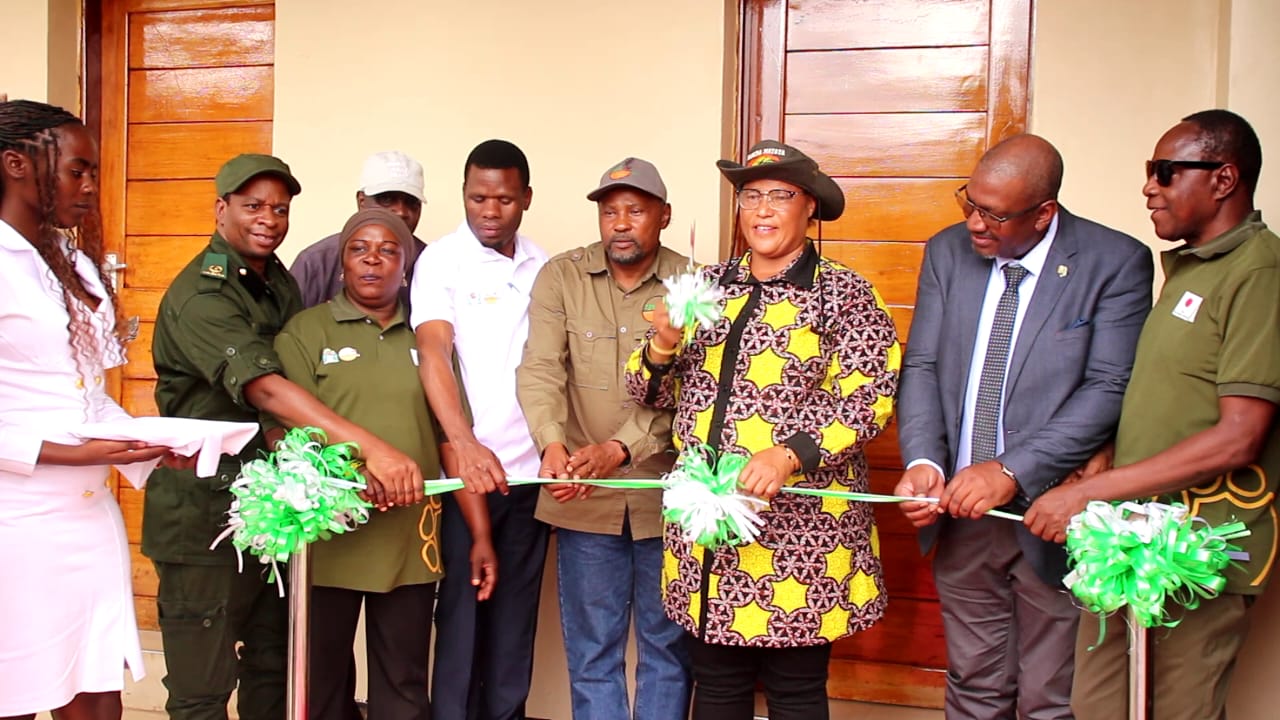
SIMIYU: The Ministry of Natural Resources and Tourism has launched a modern technology centre to monitor wildlife movements and help control human-wildlife conflicts in Maswa Game Reserve, Meatu District, Simiyu Region.
The centre uses Global Positioning System (GPS) technology and Artificial Intelligence (AI) to track animal movements, particularly when wildlife leaves the reserve and approaches human settlements, enabling authorities to take preventive measures before damage occurs.
The centre is said to be the first of its kind in Tanzania and was established at a cost of Sh790 million, funded by the Government of Japan in collaboration with the United Nations Development Programme (UNDP).
Speaking during the launch on November 25, 2026, the Ministry’s representative of the Director of Wildlife, Fredrick Ligate, said the establishment of the centre was part of the government’s strategy to address human-wildlife conflicts, particularly in communities bordering protected areas.
He said the system would enable authorities to monitor animal movements and provide early warnings whenever wildlife approaches human settlements, allowing timely intervention to prevent potential harm.
“There have been recurring conflicts between humans and dangerous wild animals, particularly in the Maswa-Makao plains, resulting in injuries and other losses among residents. In response to this challenge, the government, in collaboration with development partners, has established this centre to address the problem,” he said.
He added that 26 villages surrounding the reserve had been experiencing challenges involving elephants invading residential areas, causing deaths, destroying houses and disrupting people’s economic activities.
For his part, UNDP representative Amon Manyama said protecting wildlife for future generations was important, but conservation efforts must go hand in hand with ensuring the safety of communities living around protected areas.
He said UNDP had partnered with the government to establish the system after recognising the magnitude of human-wildlife conflict in the area.
“UNDP will continue working with the government in various development initiatives. When we identified the challenge of human-wildlife interactions, we took responsibility for participating in efforts to find a solution,” he said.
He added that the organisation had trained 98 residents from 26 villages surrounding the reserve on how to use the technology so they could participate in reporting wildlife movements and helping prevent damage caused by wild animals.
Itilima District Commissioner Ana Gidarya, who was acting as Meatu District Commissioner and served as the guest of honour at the launch, said educating communities was essential because human-wildlife interactions were inevitable in areas surrounding protected areas.
She said the success of the system would depend on cooperation between residents, conservation officers and wildlife rangers, as well as improved communication to ensure that reports of animals approaching settlements were acted upon promptly.
“Wild animals are not enemies of human beings. While we protect conservation efforts, we must also safeguard people’s lives and property. Those who have suffered losses and whose cases have been reported to the government should be compensated promptly because delays in compensation can make communities develop negative attitudes towards conservation,” she said.
Residents Speak Out on the Impact of Human-Wildlife Conflicts
Some residents living in villages surrounding Maswa Game Reserve said they had been experiencing repeated invasions by elephants into their homes and farms, resulting in deaths, destruction of property and forcing some families to abandon their homes.
Enock Fundi, a resident of Buliandulu Village, said elephants frequently invaded residential areas between 6pm and 9pm before leaving around 6am.
He said elephants had caused significant damage in the village this year, including killing two people, and expressed hope that the new technology would help address the problem.
“This year, elephants have caused serious damage in our village, including killing two people. If this technology is properly utilised, it will help address the problem of elephants invading our homes, particularly during the farming and harvesting seasons,” he said.
Another resident, Dickson Buchilu of Mbugayabanya Village, said human-wildlife conflicts had significantly affected communities and urged the government to ensure the system operated effectively and was continuously improved.
He said elephants had been invading farms, destroying houses and causing deaths, calling on the ministry to introduce additional modern technologies to strengthen efforts to control the animals.
Sapa Village Chairman Bufu Sheli said the establishment of the centre was a source of relief to residents, some of whom had abandoned their homes because of fears of elephant attacks.
He expressed hope that once the system became fully operational, residents who had fled their homes would begin returning as security improved.
“Residents who abandoned their homes because of fear of elephant attacks may return once this system becomes operational. This is good news for us because we have suffered significant losses,” he said.
JIUNGE NA SOGA COMMUNITY
MASHABIKI WA MICHEZO NA MATUKIO DUNIANI WANAKUTANA HAPA. HAKUNA FUJO, HAKUNA MATUSI — NI MAZUNGUMZO YA MAANA NA MARAFIKI WAPYA.
✅ MFUMO UNAZUIA CHATS ZISIZOFAA
✅ KUBLOCK USER ASIYE NA MAADILI
✅ KUMSHITAKI NA KUMFUKUZA MTUMIAJI MBAYA
✅ KUFOLLOW NA KUBEFRIEND WATUMIAJI WENYE MAADILI
What's Your Reaction?
 Like
0
 Dislike
0
 Love
0
 Funny
0
 Wow
0
 Sad
0
 Angry
0
















Comments (0)