

Ngorongoro’s tourism future hinges on diversification, innovation

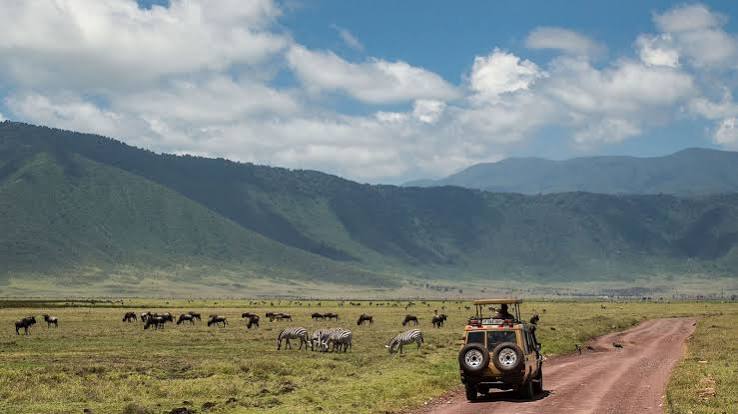
NGORONGORO: NGORONGORO’S ambition to strengthen its position as one of Africa’s leading premium tourism destinations is increasingly centred on a broader strategy that goes beyond wildlife viewing to embrace heritage, cultural experiences, innovation and stronger stakeholder partnerships.
The shift reflects a growing recognition that having exceptional natural attractions is no longer sufficient to guarantee competitiveness in an increasingly demanding global tourism market. Destinations must also understand their customers, create distinctive experiences, communicate their value effectively and ensure that tourism development contributes to sustainable conservation.
For the Ngorongoro Conservation Area Authority (NCAA), this means rethinking how its tourism products are developed, packaged and marketed, while maintaining the conservation principles that underpin the area’s international reputation.
At the centre of this ambition is the need to translate strategic planning into measurable results. Developing an institutional strategy is one thing, but implementing it requires effective leadership, adequate resources, accountability and cooperation among different stakeholders.
The authority’s strategic priorities extend beyond tourism promotion to include good governance, staff welfare, financial management, institutional growth and the efficient utilisation of assets. These areas are particularly important because the success of any tourism strategy depends on the strength of the institution responsible for implementing it.
An institution cannot sustainably expand its operations, improve visitor experiences or protect natural resources without investing in its human resources, financial systems and administrative capacity. However, one of the most significant elements of Ngorongoro’s proposed direction as revealed by the NCAA Conservation Commissioner Dr Abdul-Razaq Badru is tourism product diversification.
For many years, Tanzania’s tourism marketing has relied heavily on its internationally recognised wildlife attractions, national parks and natural landscapes. While these remain important assets, there is growing potential to expand the tourism experience by incorporating cultural, historical, archaeological and geological heritage.
Ngorongoro is particularly well positioned to pursue this approach because its attractions extend far beyond wildlife. The area offers a combination of natural landscapes, archaeological discoveries, cultural heritage and geological features that provide opportunities for developing more comprehensive tourism experiences.
This presents an opportunity to move froThe concept of value and volume diversification is particularly relevant in this regard. Value diversification involves improving the quality, uniqueness and overall experience of existing tourism products, while volume diversification focuses on expanding the range of products available to visitors.
The two approaches can complement each other by enabling the authority to generate greater economic value from its existing attractions, while opening up additional opportunities for tourism growth. Nevertheless, diversification must be carefully managed.
The development of new attractions and tourism activities should not compromise environmental protection, wildlife habitats or the ecological integrity of the conservation area. The challenge is to expand tourism opportunities without weakening the conservation foundation upon which Ngorongoro’s reputation rests.
Another important consideration is the need to understand tourism markets and changing visitor expectations. Tanzania has traditionally promoted itself as a destination blessed with abundant natural attractions. However, effective tourism marketing requires more than listing available attractions.
It must explain what visitors stand to experience, why those experiences are distinctive and what makes the destination worth visiting. This calls for market research, product development and a better understanding of different categories of tourists.
Visitors have different expectations, travel preferences and spending capacities. Some seek exclusive experiences and premium accommodation, while others prioritise affordability, accessibility and opportunities to explore local culture.
A strategy that assumes all visitors have similar needs risks overlooking important market opportunities. Ngorongoro’s positioning as a premium destination needs to be accompanied by a deliberate effort to identify complementary products that can attract domestic tourists and other market segments. Premium tourism is not necessarily about making every product expensive.
It is about delivering exceptional quality, uniqueness and value that justify the cost of the experience. At the same time, expanding access to selected tourism products will help strengthen domestic tourism without necessarily reducing the exclusivity of the destination’s flagship attractions.
This balance is important in ensuring that Ngorongoro remains competitive while benefiting a wider section of the tourism market. The authority’s focus on innovation in marketing and destination branding also deserves attention. In a competitive global tourism industry, destinations are increasingly required to develop distinctive identities that enable them to stand out from their competitors.
Ngorongoro’s proposed development of a visual identity, audio identity and special characters for digital marketing represents an attempt to create a recognisable brand that extends beyond conventional tourism advertisements.
Such approaches could help transform the destination’s identity into an engaging experience that visitors can recognise, remember and associate with particular stories. However, effective branding must be supported by authentic experiences.
A destination’s reputation is ultimately shaped not only by its promotional materials but also by the quality of services, conservation standards, hospitality and experiences visitors encounter. This makes storytelling another critical component of the strategy.
Ngorongoro has a rich heritage that provides considerable opportunities for developing compelling tourism narratives. Yet, these stories need to be communicated in ways that capture the imagination of different audiences.
Visitors should not simply be told that a particular site has historical or geological significance. They should understand how it was formed, why it matters and how it connects with the broader history of the area. This requires investment in professional storytelling skills among tour guides, conservation officers, tourism workers and other stakeholders.
ALSO READ: Ngorongoro Crater voted best tourism destination
It also requires the development of accessible content that can communicate complex historical, scientific and cultural information to children, adults, domestic visitors and international tourists. The proposed improvement of museums, exhibitions and digital interpretation facilities as revealed by Dr Badru will significantly contribute to this objective.
Through audio-visual presentations, interactive exhibitions, documentaries and digital content, Ngorongoro will provide visitors with opportunities to understand its heritage before and during their excursions. Such investments would also help preserve important historical and cultural information for future generations.
However, the success of these initiatives will depend on the availability of qualified personnel capable of developing and presenting the content professionally. Building capacity across the tourism value chain must become a central part of the implementation process.
The competitive nature of the global tourism industry makes this investment even more urgent. Other destinations are continuously improving their infrastructure, service standards, marketing approaches and visitor experiences.
Tanzania cannot rely indefinitely on the strength of its natural attractions while competitors continue to innovate. Improving infrastructure, strengthening human resources and adopting modern marketing techniques are essential to maintaining Ngorongoro’s international standing.
Equally important is the relationship between conservation authorities and communities living around protected areas. Conservation and tourism must be sustainable and it require public understanding and continued stakeholder participation.
This brings into focus another important development in the authority’s strategic direction: the formal inclusion of communication and stakeholder engagement among its institutional priorities. The recognition that no institution can achieve its objectives independently is particularly significant in a sector where government institutions, conservation organisations, tourism operators, local communities, researchers and media professionals have interconnected responsibilities.
Journalists, in particular, must play an important role in communicating conservation priorities, highlighting tourism opportunities and explaining developments within the sector. However, effective engagement should go beyond occasional media briefings.
It should involve regular exchanges of information, access to reliable data and opportunities for constructive dialogue. Such cooperation will help address misinformation, improve public understanding and build confidence in conservation and tourism initiatives.
Ultimately, Ngorongoro’s proposed transformation will be judged not by the number of strategies developed or promotional campaigns launched, but by the tangible improvements’ visitors, communities and conservation stakeholders experience.
The authority must establish clear implementation priorities, measurable performance indicators and mechanisms for assessing progress. Investment in tourism diversification, branding, infrastructure, staff development and stakeholder engagement must produce demonstrable results while safeguarding the area’s natural and cultural heritage.
Ngorongoro possesses a significant competitive advantage through its combination of wildlife, geological features, archaeological discoveries and cultural heritage. The opportunity now lies in bringing these assets together under a coherent tourism strategy that offers visitors more than spectacular scenery and wildlife encounters.
It is about creating an integrated destination where conservation, heritage, knowledge and memorable experiences reinforce one another. If effectively implemented, this approach will strengthen Ngorongoro’s international reputation, broaden its tourism market, increase the value of its products and support the longterm sustainability of conservation.
The ultimate ambition should be to make Ngorongoro not merely a destination people visit to see wildlife, but a place they remember for its history, identity, culture and exceptional experiences. That is the real test of the authority’s strategic vision.
JIUNGE NA SOGA COMMUNITY
MASHABIKI WA MICHEZO NA MATUKIO DUNIANI WANAKUTANA HAPA. HAKUNA FUJO, HAKUNA MATUSI — NI MAZUNGUMZO YA MAANA NA MARAFIKI WAPYA.
✅ MFUMO UNAZUIA CHATS ZISIZOFAA
✅ KUBLOCK USER ASIYE NA MAADILI
✅ KUMSHITAKI NA KUMFUKUZA MTUMIAJI MBAYA
✅ KUFOLLOW NA KUBEFRIEND WATUMIAJI WENYE MAADILI
What's Your Reaction?
 Like
0
 Dislike
0
 Love
0
 Funny
0
 Wow
0
 Sad
0
 Angry
0





















Comments (0)